
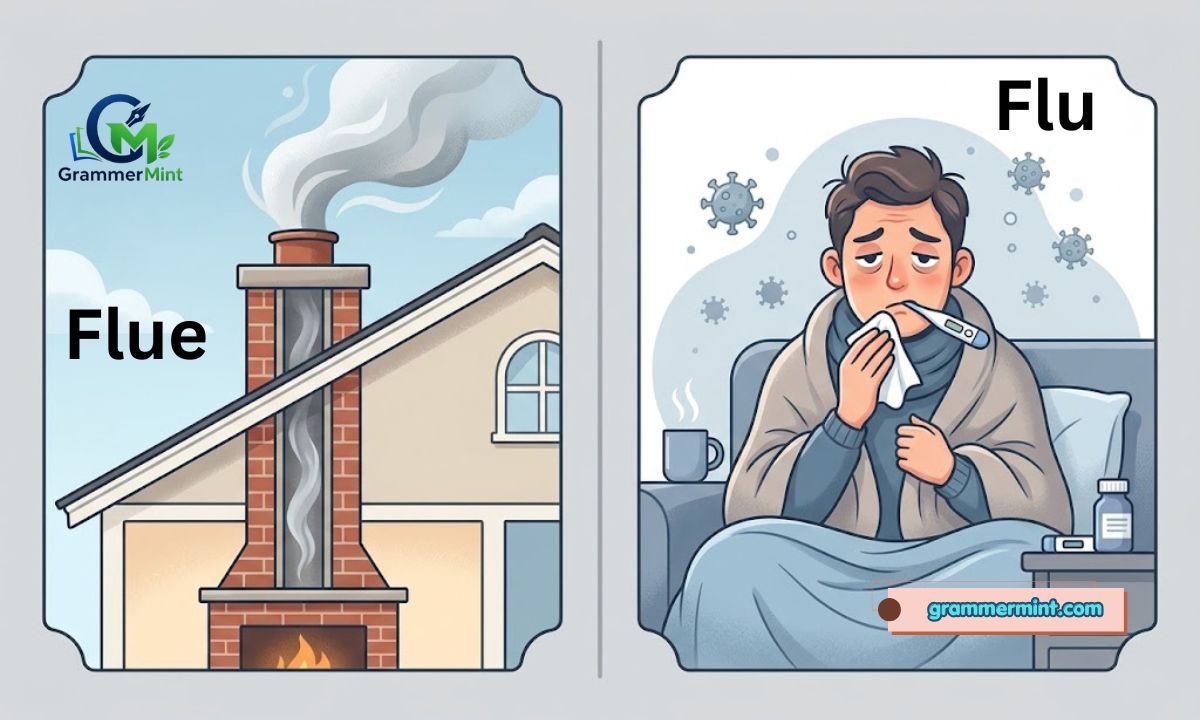
Do you ever get confused between “flue” and “flu”? Many people search for this exact question every year. Both words sound identical when spoken, but their meanings have nothing in common. One belongs to your chimney, and the other belongs to your health.
This guide clears up the confusion with simple explanations and real examples. You will learn where each word comes from, how they differ in British and American English, and which one fits your sentence. By the end, you will use both words correctly every time.
Flue or Flu – Quick Answer
Flu refers to the viral illness that causes fever, cough, and body aches. Flue refers to a duct or pipe that carries smoke away from a chimney or furnace. If your sentence is about sickness, use flu. If it is about smoke or ventilation, use flue.
Flue
A flue is a pipe, duct, or channel that carries smoke, gas, or hot air out of a building. This word appears mostly in topics about chimneys, furnaces, and heating systems.
- Example: The chimney flue needs cleaning before winter.
- Example: A blocked flue can trap dangerous fumes inside the house.
Flu
Flu is short for “influenza,” a contagious illness caused by a virus. People often mention this word alongside fever, cough, sore throat, and body pain.
- Example: She stayed home from work because she had the flu.
- Example: Flu cases usually rise during the colder months.
The Origin of Flue and Flu
Flue traces back to old English and Latin roots connected to the idea of flowing air or gas. Builders and homeowners have used this word for centuries when talking about chimneys and heating systems.
Flu comes from the Italian word influenza, which originally meant “influence.” People once believed that diseases like the flu came from the influence of stars and weather. Over time, English speakers shortened this long word to “flu” for everyday use, and it has stayed that way for over a hundred years.
British English vs American English Spelling
Both flue and flu are spelled the same way in British English and American English. Unlike words such as “colour” and “color,” there is no regional spelling difference here at all.
The real challenge with these words is context, not country. Whether you write for a US audience or a UK audience, flu always means illness, and flue always means a smoke passage.
Which Spelling Should You Use?
Use flu whenever your sentence relates to sickness, symptoms, or health. Use flue whenever your sentence relates to chimneys, furnaces, or air ducts.
If you write for readers who may not know English well, you can add a short explanation the first time you use either word, such as “flu (short for influenza).” This small step avoids confusion for a global audience.
Common Mistakes with Flue or Flu
One common mistake is writing “flue” when you actually mean the illness, since the two words look and sound alike.
- Wrong: I caught a flue last week.
- Right: I caught the flu last week.
Another common mistake happens in construction or home related writing, where people accidentally type “flu” instead of “flue.”
- Wrong: The flu in the fireplace is blocked.
- Right: The flue in the fireplace is blocked.
It also helps to remember the plural forms. Flue becomes “flues” when talking about more than one chimney duct, while flu usually stays the same since it describes an illness, not a countable object.
Flue or Flu in Everyday Examples

Emails
- Example: I won’t be in the office today, as I have the flu.
- Example: Please schedule the flue inspection before the cold season starts.
News Headlines
- Example: Flu cases rise sharply across the region this winter.
- Example: Faulty flue linked to carbon monoxide leak in local homes.
Social Media
- Example: Down with the flu, sending help and soup.
- Example: Got the chimney flue cleaned today, ready for winter nights.
Formal Writing
- Example: The report confirms an increase in flu related hospital visits this season.
- Example: The building inspection found cracks in the main flue pipe.
Flue or Flu – Google Trends & Usage Data
Search interest for flu stays much higher than flue throughout the year, since the illness affects a large number of people every season. These searches usually spike during the colder months, especially in countries like the United States, the UK, Canada, and Australia.
Searches for flue stay fairly steady year round, with small spikes when people check chimneys or heating systems before winter. Countries like the UK, Canada, and parts of Europe show more construction related searches for this word. Most online confusion between the two terms comes from health searches rather than home maintenance ones.
Comparison Table: Flue vs Flu
| Feature | Flue | Flu |
| Meaning | Chimney or ventilation passage | Influenza virus infection |
| Context | Construction, heating | Medical, health |
| Plural Form | Flues | Flu (usually uncountable) |
| Pronunciation | /flu:/ | /flu:/ |
| British English | Same spelling | Same spelling |
| American English | Same spelling | Same spelling |
How Long Does the Flu Last?
The flu usually lasts about five to seven days for most people. Fever and body aches often improve within the first three to four days, while tiredness and coughing can continue a little longer. Some people may feel fully recovered only after two weeks, especially in severe cases. Rest, fluids, and proper care help speed up recovery.
Frequently Asked Questions
Is it the flu or the flue?
It depends on the topic. Use flu for the illness and flue for a smoke or air pipe.
What are 5 symptoms of flu?
Fever, body aches, cough, sore throat, and tiredness are common flu symptoms.
Do I have a cold or a flue?
You likely mean cold or flu. Flu symptoms come on suddenly and feel more severe, while a cold develops slowly with milder symptoms.
What is flu?
Flu is a contagious illness caused by the influenza virus, affecting the nose, throat, and lungs.
Conclusion
Flue and flu may sound the same, but they belong to two completely different worlds. Flue relates to chimneys and heating, while flu relates to a common seasonal illness. Knowing this simple difference helps you avoid mistakes in emails, articles, and daily conversations.
Keep this guide close whenever you feel unsure about which word to use. A quick thought about sickness or smoke will always lead you to the right choice.

Eliana is an English language writer with 10 years of experience. She creates simple grammar guides, vocabulary tips, and writing resources for GrammerMint readers.